Donnerstag, 8. März 2012

Advancind Japanese Troopers painted

Hi everybody,


Again, I'm sorry for the lack of updates. I'm still working on my Bachelor's degree... only one more part to do!


Simon hasn't been sitting around idle either as you can see from the following photo:

 RJ-J04 Japanese Troopers, advancing (4)

 Gorgeous work as we've come to expect from him, as you'll surely agree!

Freitag, 17. Februar 2012

Valentine's Day

Nothing miniature or Russo Japanese War related, just a quick note of what I got for Valentine's Day. ;-)

A bag of MITSUBA rice snack and couple of bottles of Tsingtao beer. As far as I know (and also indicated by the 'since 1903'), the Tsingtao brewery is in the tradition of the original German founded brewery, the first one in the whole of China.

Montag, 6. Februar 2012

More references and castings

First of all, I'm sorry for the lack of new posts during the last weeks! (I'm right in the middle of my Bachelor's degree right now.)

Although not very active online, I have received a couple of interesting things:

Some more soap trading cards, this time from a company named Dr. Thompson ('the best, cheapest and most comfortable soap powder in the world'! As it says on the back of all cards.):


From top to bottom they show #3: Alert of Japanese troops in Korea, #4: Attack on Port Arthur and #6: Cossack attack.

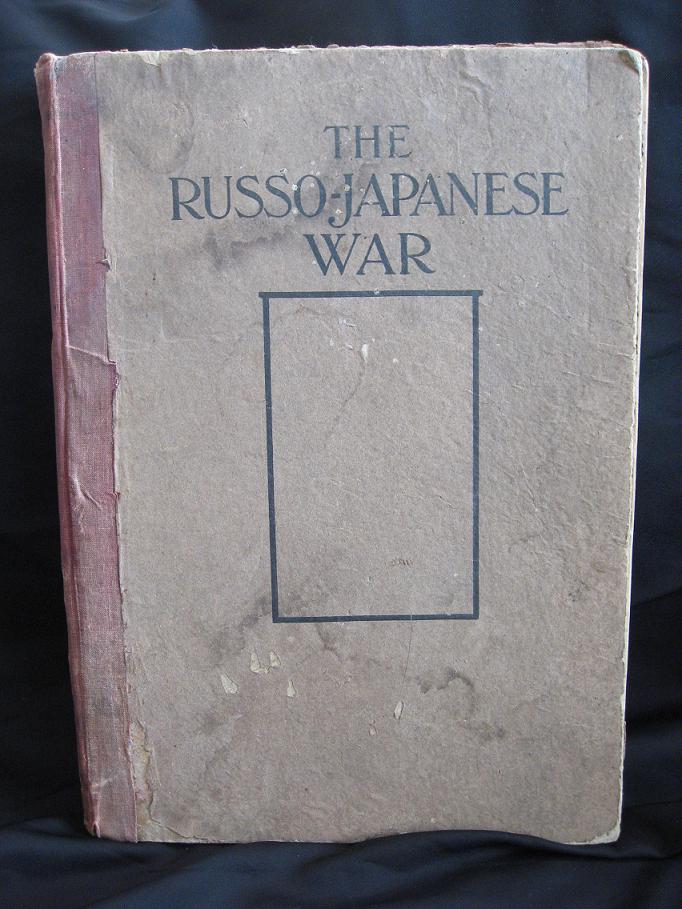
Even more interesting and usefull, another contemporary book by P.F. Collier & Son titled, surprisingly, The Russo-Japanese War and published in 1904:


Again, the cover is pretty battered and also missing a photo/print, that must have been originally attached on the rectangle on the front. The pages are in way better condition and, most importantly, complete with no bigger damages. 


And last but not least, I got a tidy little package from Griffin Moulds with the castings of set number four, the advancing Japanese troopers (RJ-J04). Here they are straight out of the parcel with just a quick ink job, no cleaning work done at all:


The first set has already arrived at Simon's, so they'll get an equally great paint job as their comrades as soon as he finds the time.

Freitag, 6. Januar 2012

Colour/Painting Guide: Japanese infantry

A couple of days ago I received an enquiry about the colours Simon used to paint the uniforms of our display models. I thought I'd best share it here so anybody interested can benefit from it.


So, without furthern ado here's Simon's colour guide:

I basically used 4 colours: GW Foundation Khemri Brown and Dheneb Stone and Vallejo Game Color Desert Yellow and Bonewhite.

The darker coloured uniforms used a base of Khemri Brown highlighted with Desert Yellow and finally a little Bonewhite. The lighter uniforms were given a base mix of Khemri Brown and Dheneb Stone, with more Dheneb Stone being used for highlights (I may have added a little white for some of the final highlights as well).
The different shades of khaki on some trousers, blouses and caps represent pieces from different origins, delivery batches and also some, that haven been in use longer than others and therefore faded under the Manchurian sun.
The differences may seem a little bit extreme but I've actually seen worse fading and colour variations during my own mandatory military service in 2002/03.

Montag, 2. Januar 2012

New Greens

First of all, Happy New Year to everyone!

My year started really well as I received a mail from Paul with photos of new greens for the RJW-Line this morning.

First up are the photos for the next Japanese set RJ-J04 Japanese Troopers, advancing:


These miniatures are meant to depict soldiers on patrol rather than during an assault as their charging comrades do. Therefore they don't have their bayonets fixed and they carry an extra piece of equipment a so called  gassai-bukuro (the thing, that looks like a second bedroll or a rolled greatcoat), by western observers refered to as a 'cloth holdall'. 

The gassai-bukuro is a sack made of cloth about 8.5 to 9" resp. 0.22 to 0.22 m wide and  6 to 6.5' resp. 1.83 to 1.93 m long. Both ends are open and it is sewn across  in the middle (where it rests on the soldier's soulder) to form two compartments. It was basically used as a replacement for the bulky knapsack in the field, especially when on patrol duties and such.

Here are the next four dollies for future Japanese miniatures:


 And, due to popular request, the first eight Russian dollies:


As you can see, the first sets will represent rather well equipted Russian units.

Freitag, 16. Dezember 2011

Soap and coffee...

... and cigarette trade cards seem to have been very popular in the early 20th century.

Nowadays comparable merchandise usually depict movie and cartoon characters or athlets, especially during Olympic Games and international football (i.e. soccer) championship. (At least here in Germany.)

But back in the day these showed pictures of  a broad variety of subjects, also of wars. (We know about this at the latest since Baldrick's whole family took up smoking to get the cards with Lord Flasheart during WWI.)
I've collected a couple of those covering the Russo-Japanese War over the last year or two. For me these are great little pieces of history.

First up are four cards of German origin, which I found at a flea market in Hamburg about a year ago (fronts and respective backs):

Standards of the world - Japanese infantry in battle.

Russian dragoons capture a Japanese flag.

The Japanese cruiser Asama in combat.

The retreat of the Russians from the Yalu.
Here's also a shot for size reference with a GBP-Penny, a US$- and an €-1-Cent coin (the four cards above are all pretty much same size):


As you can see, some of these are more of an artistic impression rather than a historical correct depiction.

Next up is a set released by the British cigarette company Wills. Besides the military scenes, these also show scenes of the street lives in Tokyo, St. Petersburg and Port Arthur. There are also portraits of a lot of the important personalities of the war. Exactly the same series of cards (pictures, numbering and descriptions) was also available from the company Lambert and Butler, the only difference being the company's name on the back.


These are really small, even compared to the other ones. (On the back each has a brief description of the shown szene/personality/etc.)


Here are three showing Japanese troops:


Also some more unusual subjects like this one are part of the collection:


(I'm only short of number 51 for a complete set, if somebody has a spare one, please let me know! I also have a couple of duplicates to swap.)

Sonntag, 11. Dezember 2011

Tsingtao/Tsingtau...

... or what else can the RJW Japanese be used for besides the actual RJW? (A question which is frequently asked.)

One interesting piece of history for which they can be pressed into service (with or without some minor modifications) is the siege of Tsingtao (or Tsingtau in German): The battle for the German foothold in China during WWI in late 1914. With the Germans on one side and the Japanese on the other with support from Austro-Hungary and Great Britain respectively.

Here are two pages from an old book/magazine showing Japanese soldiers preparing for the encounter with the Germans. As one can see, our Japanese miniatures would fit the bill nicely. Unfortunately, I couldn't find a date for these photos.


The following photo is meant to be taken during the actual siege in 1914. Most noticable the lack of gaiters. A lot of soldiers seem to have replaced them with wrappings around their lower leg (the correct Englisch term escapes my right now, sorry!). These wrappings can be seen sporadically also on RJW photos but by the time of WWI these seem to have become the norm (maybe due to British influence?).

Another photo from the siege, cleary showing that the gaiters were also still in use:

I hope to have some photos of new greens for the next releases soon.